LMZFUEL GROUP
FREN
Request an audit
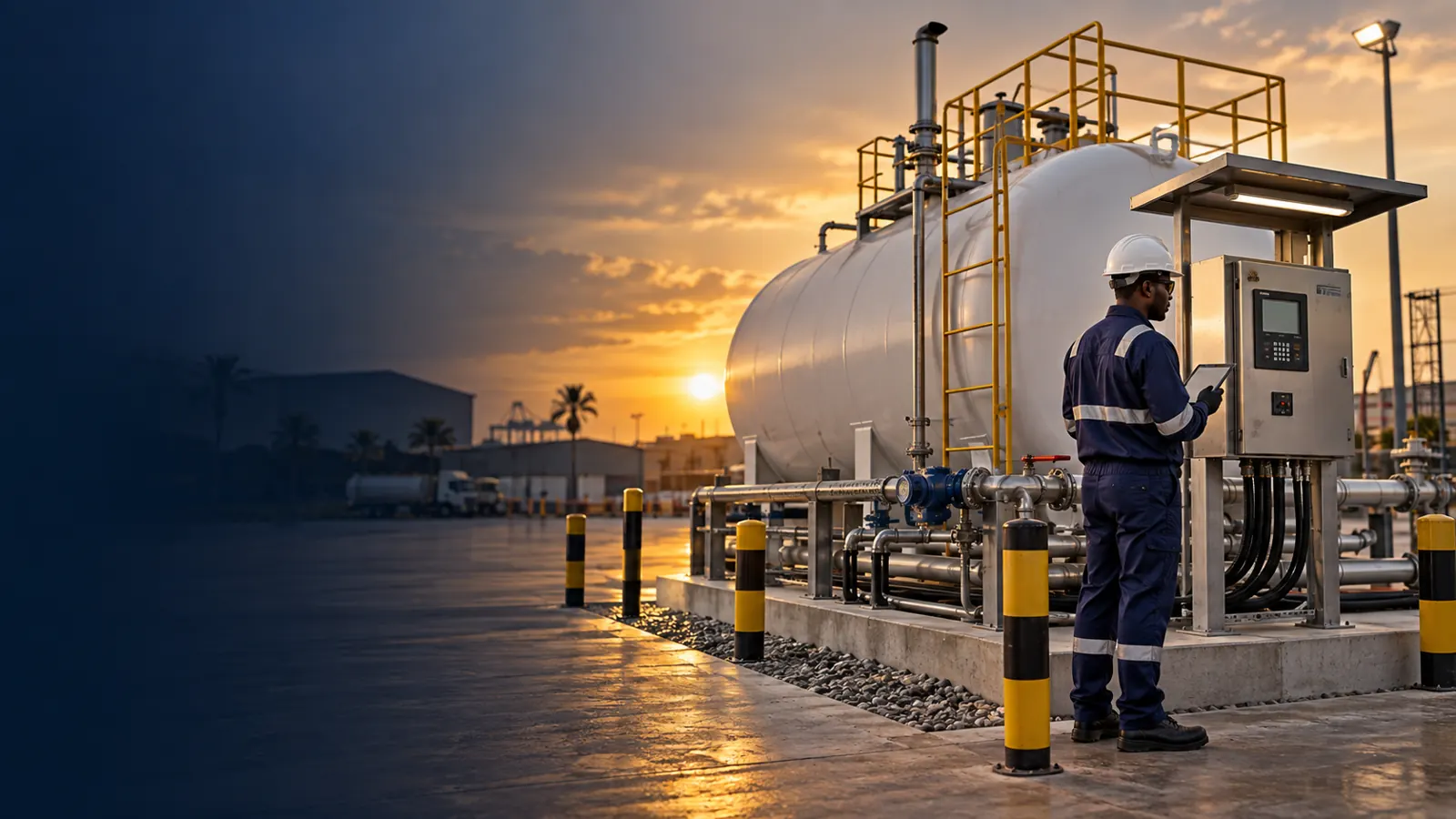
Modern fuel management installation at an industrial site
INTELLIGENT FUEL MANAGEMENT

Control every litre of fuel.

LMZ Fuel Group designs and integrates fuel measurement, monitoring and automation solutions. Our systems strengthen stock control, flow traceability and the operational performance of industrial sites.

Continuous control of fuel flowsFrom receipt to final consumption, with centralised, reliable and actionable data.
01Assessment & engineering
02Supply & integration
03Deployment & knowledge transfer
04Maintenance & continuous improvement
OUR SOLUTIONS

Solutions engineered for your operations

Our modular architectures integrate with existing installations and support new projects, from a single asset to a multisite network.

01

Intelligent fuel management

Control the fuel cycle from receipt to consumption through one unified view.
02

Industrial flow meters

Measure the actual consumption of engines, locomotives, vessels and industrial equipment.

03

Tank management

See tank levels, track changes and plan your supplies.

04

Private fuel stations

Control access and reconcile received, stored and dispensed volumes.

05

Generators

Monitor generator consumption, fuel level and operation remotely.

06

Tanker trucks

Track sensitive operations from loading to each delivery point.

07

Vehicles & mobile equipment

Track the activity and consumption of vehicles, machinery and railway equipment.

08

Instrumentation & automation

Monitor critical parameters and automate the required actions.

Industrial fuel storage and management installation
SOLUTION 01

Intelligent fuel management

Control the entire fuel cycle from receipt to consumption: stocks, dispensing, deliveries and anomalies in one platform.

Operational challenges

In many companies, fuel is tracked through scattered tools: paper slips, spreadsheets, manual readings and driver declarations. Differences between purchased, stored, dispensed and actually consumed volumes are difficult to explain. Losses, data-entry errors and unauthorised withdrawals go unnoticed, while fuel remains one of the largest operating expenses.

Architecture and operation

Every point in the fuel chain can be connected to a central platform that automatically records receipts, transfers, dispensing and consumption. Volumes are reconciled at each stage and inconsistencies are flagged. The solution is modular: start with one site or asset, then expand progressively.

Technical scope

Measurement, identification and communication equipment selected for the client’s installations and assembled into an architecture defined after assessment.

Data monitored

  • Volumes received, stored, transferred and dispensed
  • Consumption by equipment, vehicle, site or worksite
  • Continuous stock levels
  • Operating hours and idling time
  • Differences between expected and measured volumes
  • Abnormal events: sudden level drop, undeclared filling or out-of-hours dispensing

Operational outcomes

  • A consolidated and reliable view of all company fuel
  • Fast detection of losses, leaks and unauthorised withdrawals
  • Removal of manual entry and related errors
  • Automatic reports for management, finance and audit
  • A factual basis to negotiate, plan and reduce costs

Industry applications: mining, construction and public works, transport and logistics, industry, energy, telecommunications, agriculture, fuel distributors, local authorities and public administrations.

Integration with existing systems: the solution adapts to existing tanks, stations and fleets without systematically replacing existing equipment. Data can be exported to the company ERP or management tools.

Measurement instrumentation installed on an industrial engine
SOLUTION 02

Industrial flow meters

Measure the actual consumption of generators, engines, pumps and industrial equipment.

Operational challenges

Engine consumption is often estimated from averages or successive refills. It then becomes difficult to identify an over-consuming engine or verify that delivered fuel was actually consumed by the machine.

Architecture and operation

Direct measurement on the fuel supply circuit provides the engine’s actual net consumption and sends it continuously to the platform.

Technical scope

Measurement solutions selected for the engine type, flow rate and fuel circuit after assessment.

Data monitored

  • Total and hourly consumption
  • Consumption by operating regime
  • Operating time
  • Tampering attempts

Operational outcomes

  • Measured consumption instead of estimates
  • Identification of over-consuming equipment
  • Early detection of mechanical drift
  • Preventive maintenance based on real data

Industry applications: industry, mining, energy, telecommunications, construction, maritime and inland transport, agriculture, hospitals, data centres, railways and locomotives.

Integration with existing systems: installation on existing fuel lines without modifying the engine, across brands, subject to technical qualification of the circuit.

Industrial tank equipped for stock monitoring
SOLUTION 03

Tank management and monitoring

View tank levels in real time, receive useful alerts and plan supplies at the right time.

Operational challenges

Tank levels are still often checked manually, occasionally and approximately. It becomes difficult to verify delivered volumes, anticipate shortages or detect an abnormal drop between readings. Orders are placed too early or too late, and delivery differences remain undocumented.

Architecture and operation

Each tank level is measured continuously and converted into an accurate volume. The platform records every fill and withdrawal and triggers alerts according to the thresholds defined by the company.

Technical scope

Measurement and transmission solutions adapted to the tank type — above-ground or underground —, shape and location.

Data monitored

  • Real-time level and volume
  • Volumes received with each delivery
  • Withdrawn volumes and consumption rate
  • Fuel temperature
  • Water at the bottom of the tank
  • Abnormal level drops outside dispensing

Operational outcomes

  • Objective verification of supplier deliveries
  • Supply planning and shortage prevention
  • Immediate leak or theft alerts
  • Removal of manual readings
  • Centralised monitoring of multiple sites from one screen

Industry applications: fuel depots, service stations, mining, industry, energy, telecommunications, construction, hospitals, agriculture, railway sites, ports and remote sites.

Integration with existing systems: installation on existing above-ground or underground tanks. Each tank is calibrated according to its shape and dimensions.

Private company station supplying a truck fleet
SOLUTION 04

Private fuel stations

Automate your internal station, control access and reconcile every litre received, stored and dispensed.

Operational challenges

At an internal station, dispensing often relies on an attendant and a paper register. It is difficult to know who served which vehicle, how much and when. Differences between the supplier’s delivery, the actual tank stock and pump withdrawals often remain unexplained because reliable measurements are missing at each stage.

Architecture and operation

Each dispensing operation is authorised only after the user and vehicle are identified. Volumes are recorded automatically without manual entry. Tank stock is measured continuously, making it possible to verify the quantity actually received at each delivery and compare it with dispensed volumes. Every difference is flagged and documented.

Technical scope

Depending on the site: user and vehicle identification, automatic tank-level measurement, dispensing equipment and supervision tools. Each installation is sized after assessment.

Data monitored

  • Actual volume received at each delivery, compared with the supplier document
  • Continuous tank stock
  • Volume dispensed by operation, driver and vehicle
  • Date, time, mileage or engine hours
  • Daily reconciliation between opening stock, receipts, dispensing and closing stock
  • Differences between expected and measured stock
  • Rejected access attempts

Operational outcomes

  • Objective control of supplier deliveries
  • Access restricted to authorised users and vehicles
  • Traceability of every litre from receipt to dispensing
  • Fast detection of leaks, counting errors or withdrawals
  • Limits configurable by vehicle or period
  • Removal of the paper register

Industry applications: transport and logistics, construction, mining, industry, local authorities, public administrations, rental companies, agriculture, ports and railway fleets.

Integration with existing systems: the solution can equip an existing station while retaining its tanks and, depending on their condition, existing pumps. It can also be supplied as a complete fixed or mobile station.

Technician monitoring an instrumented generator
SOLUTION 05

Generator monitoring

Monitor generator consumption, operating hours and fuel levels remotely across one or more sites.

Operational challenges

Generators often operate at remote or lightly supervised sites. Actual consumption is poorly known, operating hours are reported manually and level drops are only noticed afterwards.

Architecture and operation

Consumption, level and operating data are transmitted continuously. The platform compares these data and alerts in the event of an anomaly, shutdown or suspicious level drop.

Technical scope

Remote measurement and supervision solutions adapted to the generator model, output and site network coverage.

Data monitored

  • Total and hourly consumption
  • Operating hours
  • Continuous fuel level
  • Refills and level drops
  • Generator speed and load
  • Starts, stops and faults

Operational outcomes

  • Monitor multiple generators and sites from one screen
  • Immediate detection of fuel draining or withdrawals
  • Maintenance planned from actual operating hours
  • Compare generator performance
  • Fewer inspection trips to site

Industry applications: industry, mining, telecommunications, hospitals, hotels, data centres, banks, public administrations, ports, railway stations and remote production sites.

Integration with existing systems: installation on generators already in service, across brands. Configuration is defined according to the engine model and available interfaces.

Tanker truck tracked at a fuel depot
SOLUTION 06

Tanker traceability

Track loaded, transported and delivered volumes throughout the logistics chain, from depot to final customer.

Operational challenges

Between depot loading and customer delivery, transported fuel is often outside any control. Differences between loaded and delivered volumes are difficult to explain: measurement errors, unauthorised unloading, unplanned stops or partial deliveries.

Architecture and operation

Volumes are tracked from loading through delivery. Each sensitive event is linked to a position and time, allowing the complete fuel journey to be reconstructed.

Technical scope

Measurement, security and tracking solutions configured according to the number of compartments and delivery method.

Data monitored

  • Loaded volume by compartment
  • Delivered volume at each delivery point
  • Truck position and route
  • Stops, duration and location
  • Opening events with location and time
  • Differences between loading and delivery

Operational outcomes

  • Complete traceability from depot to customer
  • Detection of unauthorised unloading en route
  • Delivery note based on measured rather than declared volume
  • Fewer customer disputes
  • Control of routes and delivery times

Industry applications: fuel distributors and carriers, depots, mining, construction, logistics companies, ports, marine refuelling and industrial fuel suppliers.

Integration with existing systems: installation on tankers already in service, adapted to each configuration after technical qualification and verification of applicable metrology requirements.

Controlled refuelling of mobile equipment at a mining site
SOLUTION 07

Vehicles and mobile equipment

Track vehicles and machinery to optimise utilisation, control consumption and quickly identify differences.

Operational challenges

For a fleet of vehicles or machinery, it is difficult to know where each asset is, how long it actually works and how much it consumes. Idling, off-mission use and fuel withdrawals from tanks are common and difficult to prove.

Architecture and operation

Each vehicle or machine transmits position, activity and consumption data. The platform produces reports by machine, driver or worksite.

Technical scope

On-board tracking and measurement solutions adapted to mixed fleets of all brands and ages.

Data monitored

  • Position, routes and work zones
  • Engine hours and idling time
  • Consumption by machine and hour
  • Tank refills and level drops
  • Speed and driving behaviour
  • Use outside authorised hours

Operational outcomes

  • Better machine utilisation
  • Reduced idling time
  • Detection of fuel theft from tanks
  • Cost allocation by worksite or customer
  • Maintenance planned from actual use

Industry applications: mining, construction, quarries, transport, logistics, agriculture, forestry, local authorities, equipment rental, railways, ports and maritime activities.

Integration with existing systems: the solution covers mixed fleets, from new to older machines. Available data depends on the vehicle, its electronics and existing interfaces.

Automated industrial installation with field instrumentation
SOLUTION 08

Instrumentation and automation

Improve the safety, reliability and performance of industrial installations through measurement and automation.

Operational challenges

Many installations still rely on manual controls, occasional measurements and few alarms. Incidents such as overflow, overpressure, leaks or pump failure are detected late, and operating data is not used.

Architecture and operation

Critical installation parameters are monitored continuously. Rules defined with the client automatically trigger the required actions — shutdown, closure or alarm — with supervision available locally or remotely.

Technical scope

Measurement instruments, automation and alarm systems sized for each site’s risks and constraints.

Data monitored

  • Levels, pressures, temperatures and flows
  • Pump, valve and motor status
  • Alarms and faults
  • Equipment operating time
  • Event history

Operational outcomes

  • Prevention of overflows, leaks and incidents
  • Improved safety for people and installations
  • Fewer manual interventions
  • Early fault detection
  • Actionable data to improve performance

Industry applications: fuel depots, industry, mining, energy, water treatment, food processing, pumping stations, ports, logistics terminals and railway installations.

Integration with existing systems: instrumentation can be added progressively to operating installations, without a prolonged shutdown where conditions allow, and integrated with existing supervision systems.

Controlled refuelling of mining equipment at a private station
PRIVATE STATIONS & MOBILE EQUIPMENT

Link every litre to a verifiable operation

Identification, authorisation, dispensed volume, vehicle and history: every refuelling becomes usable data.

Assess your installation →
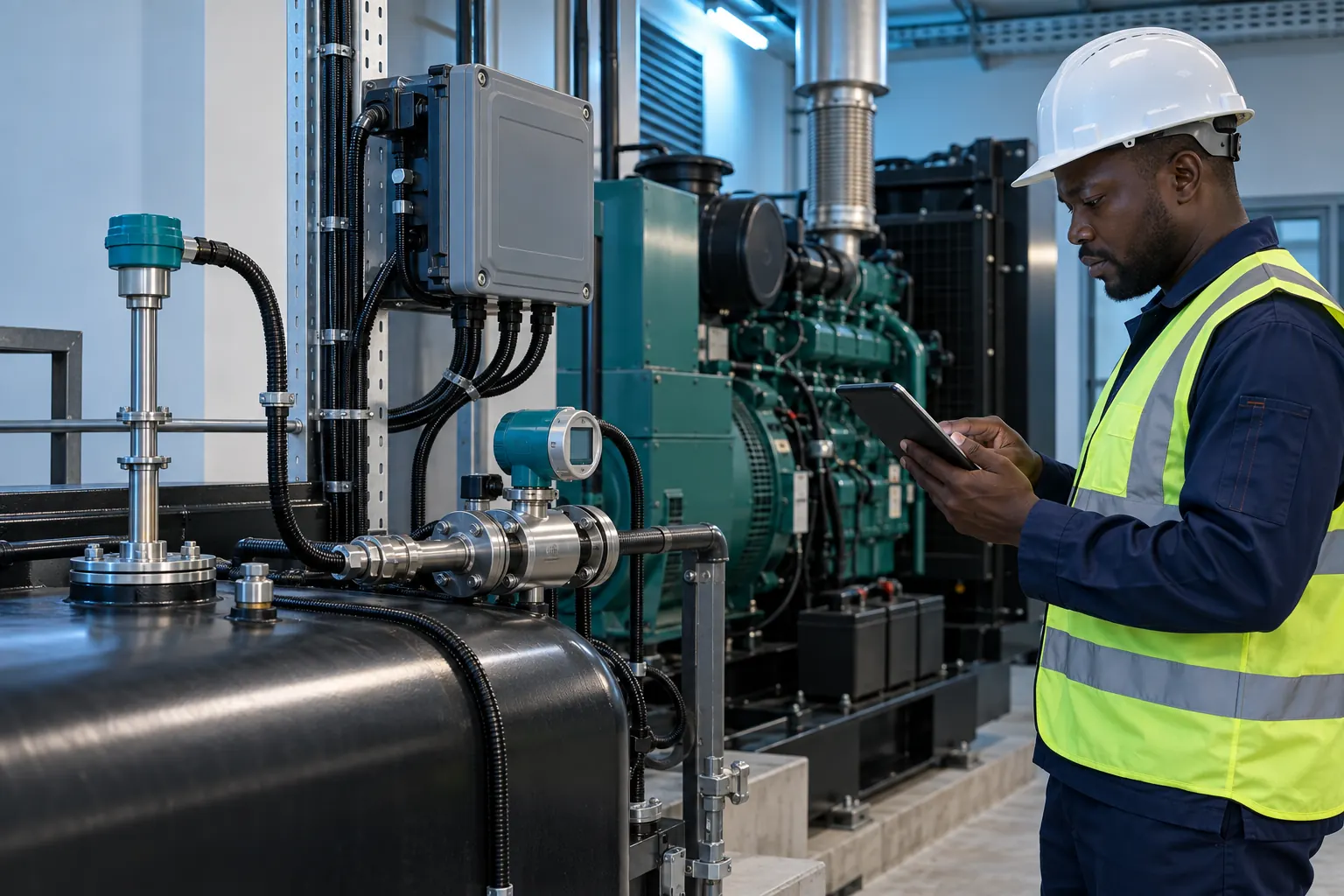
Technician checking a generator monitoring installation
GENERATORS

Monitor actual consumption

Level and flow measurement, operating hours and technical alerts.
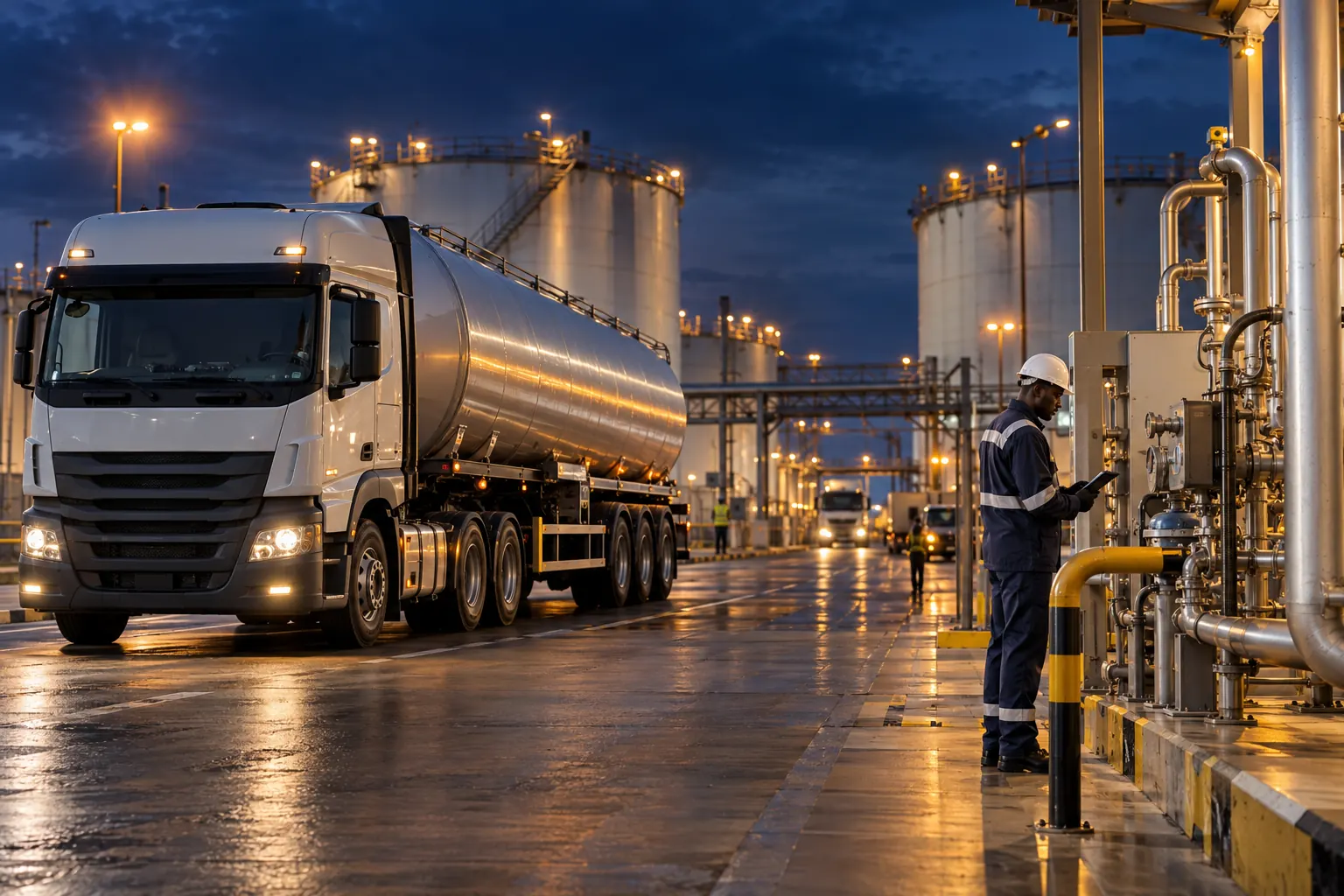
Tanker truck tracked at an industrial depot
TANKER TRUCKS

Track from loading to delivery

Continuous information across the logistics chain.

INDUSTRIES

Expertise for demanding operating environments

Solutions engineered for fuel-intensive activities, critical infrastructure and operations requiring enhanced traceability.

  • Transport & Logistics
  • Industry
  • Construction
  • Agriculture
  • Energy
  • Telecommunications
  • Healthcare
  • Hospitality
  • Fuel distribution
  • Mining
  • Railways
  • Ports & maritime
ABOUT US

Who we are

LMZ Fuel Group designs and deploys fuel management, measurement and automation solutions for industrial environments and strategic infrastructure.

From the tank to the equipment, our systems deliver flow traceability, reliable data and precise control of fuel consumption.

We support technical, finance and operations teams in securing supply, reducing losses and sustainably improving asset performance, from a single site to an entire network.

Our missionMake every litre visible, measurable and controlled.

WHY LMZ?

A results-driven approach

Beyond equipment supply, LMZ Fuel Group designs complete architectures adapted to the technical and operational constraints of each site.

OUR METHOD

A structured process, from assessment to operation

Performance relies on a coherent architecture combining equipment, communications and operational data. Each project is designed around the client’s installations, uses and objectives.

01

Assess

Tanks, pumps, circuits, uses and current control methods.

02

Design

Select the instruments, communications and reports that are genuinely useful.

03

Deploy

Install, configure, test and train the relevant teams.

04

Support

Maintain accuracy and evolve the system with your operations.

OUR EXPERTISE

Complete control of the fuel value chain

Control stocks, track distributions, measure actual consumption and turn field data into informed decisions.

StocksReliable volume visibility
ConsumptionActual measurement by equipment
AnomaliesFaster detection
ReportsCentralised data
ASSESSMENT

Turn your fuel data into operational performance.

Our teams assess your installations, flows and control methods to identify variances, define priorities and design a solution adapted to your operations.

Or email us at contact@lmzfuelgroup.com

CONTACT

Let’s talk about your project

A question about our solutions or your installation? Write to us and our team will get back to you.